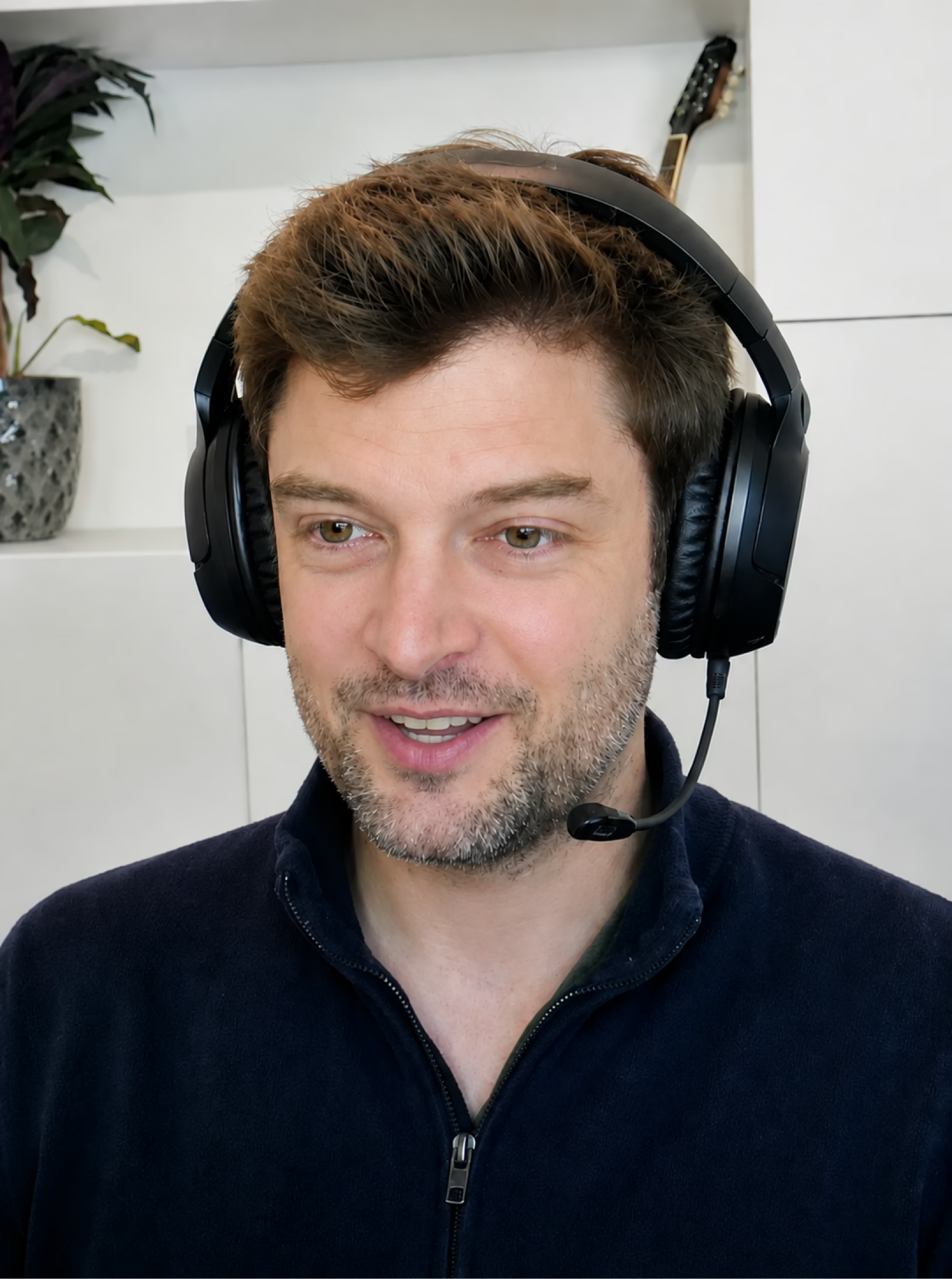
Colleen Connors has run funds, founded a tech start-up, served as COO of a digital identity company and now coaches leadership teams through Coaching Leaders Global. In this episode of The Humans Behind the Tech, she talks to Old.St Labs co-founder Rob Woodhead about her non-linear career, from bond trading at Schroders to an entrepreneurship MBA at Babson.
Colleen explains why founders misdiagnose their own problems around 80% of the time, and why the real issue is usually structural rather than personal. She describes the trust gap that holds back highly capable, self-reliant founders, and the discipline of staying focused when a prospective customer offers revenue for a detour. On AI, she sees teams saving real time with tools like Claude. She also argues that experience and human judgement are still what separate good output from plausible-looking mistakes.
Along the way she covers compartmentalising under pressure, firing clients who mistreat your team, and finally pulling on a Team USA shirt at 40.
Colleen started her career in finance, as many University of Pennsylvania graduates do. She spent around eight years at Schroders in Philadelphia and London. Moving from a small municipal bonds unit to global fixed income at headquarters threw her in at the deep end. It also showed her what she wanted from work: pace, change and no two days alike.
Meanwhile, friends starting businesses kept asking for her advice over coffee. She set up a monthly group for women entrepreneurs, then began hosting events that brought her finance contacts together with that network. When she decided to leave finance, she chose an MBA at Babson, which is known for its entrepreneurship programme. A hockey teammate had suggested it. Colleen wanted a classroom full of people who would all start companies one day, and she wanted to make fewer mistakes once she started her own.
Rob and Colleen both started in finance, and both say it shaped how they treat clients. As a fund manager, Colleen says, performance was everything, and her personal credibility rested on it. She has carried that standard into her coaching. Early exposure to CEOs and CFOs also gave both of them the confidence to advise senior leaders as peers. Colleen adds that confidence only lasts if it rests on experience, and two decades of experience include plenty of things going wrong.
Colleen hasn't had a truly consistent salary since 2011, and she's candid about the emotional cost of entrepreneurship. What helps most, she says, is the ability to compartmentalise. She draws on sport for this: what happens on the pitch stays on the pitch. Her most striking example came just before a major contract meeting. She learned she was pregnant, composed herself, went in and closed the deal, and only then sat down with her business partner to work through what it meant.
At Coaching Leaders Global, Colleen works in the space between strategy and execution. Founders, leadership teams and sometimes VCs bring her in because something isn't working. The diagnosis is usually different from what they expect. A sales manager who seems to be underperforming may simply lack the process and accountability to do the job. A founder may have become the bottleneck without anyone noticing, so the business slows down whenever they go on holiday. Structures that worked for a 10-person team rarely survive growth intact.
Because she's an outsider, Colleen can say things no one inside the company can, including telling a CEO that their behaviour is unacceptable. Many founders have no board to answer to, so she is often the only person holding them accountable.
Colleen sees two patterns again and again in ambitious founders. The first is trust. Founders who built their success on self-reliance struggle to hand over ownership, partly because they expect hires to share their level of commitment. The second is focus. Founders are natural ideas people, and the hardest distraction is an outside prospect asking for a custom build. Moving engineering resources to chase one customer is a major strategic decision, she argues, and too many companies make it lightly.
Colleen sees AI everywhere among her clients. Individuals use it for emails, meetings and admin. One client gave Claude two years of well-written code to bring a dormant product back into production. Engineers use it as a QA assistant to check the day's work, and one company now requires every employee to use AI daily.
She is just as clear about the limits. AI is only as good as what it starts from, and she has never had a generic output she wouldn't change. Rob points out a generational risk: if you've never learned what good looks like, you can't tell when the AI has got it wrong. Both agree it's a tool, not a replacement.
Colleen Connors is a leadership advisor and executive coach who helps founders and leadership teams turn strategy into consistent execution. She began her career as a fund manager at Schroders in Philadelphia and London, then completed an MBA in entrepreneurship at Babson College. She founded a sports technology start-up and later served as COO of a digital identity company, where she remains on the board. She now runs Coaching Leaders Global, helping scaling companies build clarity around KPIs, alignment, accountability and operational performance. A lifelong hockey player and coach, Colleen has represented the US Masters team at the World Cup.
Rob Woodhead is co-founder of Old.St Labs, a London-based AI software development agency that has spent six years turning founders' ideas into working products. Before Old.St Labs, he worked in corporate finance advising on mergers and acquisitions. He hosts The Humans Behind the Tech, a podcast about the people, careers and decisions behind the technology industry.
Colleen Connors describes her role as working in the gap between strategy and execution. She diagnoses bottlenecks, leadership misalignment and outdated structures, then helps leadership teams build and deliver a plan to fix them.
According to Colleen, founders are usually too close to the business to see the root cause. Around 80% of the time, what looks like a people or alignment problem turns out to be structural, such as processes or accountability that the company has outgrown.
Often no one, Colleen says. In those cases an outside advisor can fill the role, because they can raise difficult issues without internal politics getting in the way.
Founders whose success has come from self-reliance often find it hard to trust others with ownership. Colleen says part of the fix is accepting that new hires won't share a founder's level of commitment, and that this is fine.
Colleen sees it mostly at the individual level so far: emails, meetings, admin, code review and QA. Some companies are going further, using tools like Claude to take actions or revive old codebases.
Neither Colleen nor Rob thinks so. Both see AI as a time-saving tool that still needs an experienced person to check its output, because you can only spot an error if you know what good looks like.


Old.St Labs is a software design and development company based in London, building high-quality digital products for startups and established businesses across the UK and US.
.avif)